


Mapping Melodrama
Programmed by: Avivit Ashman and Emma Johnson
Peter Brooks traces the locus of the term melodrama — melos (music) + drama (action) — to Rousseau, who used it to describe the new mode of emotional expressivity he encountered on the stage in the run up to the French Revolution. As the genre matured, it turned from literature and theater to cinema, first in the serial queen melodramas of the 1910s, radio soap operas, and later television. Mapping Melodrama traces the transnational and cross-historical flow of generic conventions across decades, placing films in conversation from Japan, Egypt, China, Germany, India, Spain, South Korea, Mexico, France, Mali, and the United States, from early silent works to later reinventions. Melodrama reveals itself as a social strategy adaptable across national film traditions yet never reducible to a single mechanism.
What connects these films is a shared set of questions: the negotiation of the public andvs. private, the role of gender and divisions of labor, permissible expressions of sexuality, and conceptions of home, fantasy, and desire; torrid affairs expose the rigidity of class systems, and families are estranged across newly-drawn borders. Theorists have understood melodrama as a genre which interrogates moral clarity in a secular world (Peter Brooks), a site in which stylistic excess expresses the unsayable (Thomas Elsaesser), and as a profession of the desire to return to mythic origins (Linda Williams). Though long-maligned as women’s films and weepies, melodrama remains a form that unabstracts real economic and political relations and attests to the personal scars of history. In the words of film scholar Carla Marcantonio, melodrama “turns us into active participants of those very societies that it reflects back to us and which it helps construct…the stories melodrama helps tell remind us that we cannot move through the world intact.”
Floating Clouds (1955)

Mikio Naruse · 123m · DCP
Mikio Naruse’s adaptation of Fumiko Hayashi’s eponymous final novel follows Yukio (played by frequent collaborator Hideko Takamine) as she returns to postwar Japan with hopes of rekindling her affair with a married man. The film is an essential example of Naruse’s restrained formalist meditations on transience, working within the realist tradition of shōshimin-eiga, or lower middle class dramas. Notoriously reserved, Naruse gave his actors little feedback and challenged his heroines to embrace ambivalence to embody the act of thinking.
Wednesday, September 30 7:00 PM
Mädchen in Uniform (1931)

Leontine Sagan · 88m · DCP
In a strict all-girls boarding school in pre-World War I Prussia, a student falls desperately in love with one of her teachers. A scandal upon its release in Weimar Germany — the film contains one of the first on-screen lesbian kisses, and was saved from censorship in the United States by fan Eleanor Roosevelt — Mädchen is an expressionistic portrayal of the struggle between discipline and desire.
Wednesday, October 7 7:00 PM
The Goddess (1934)
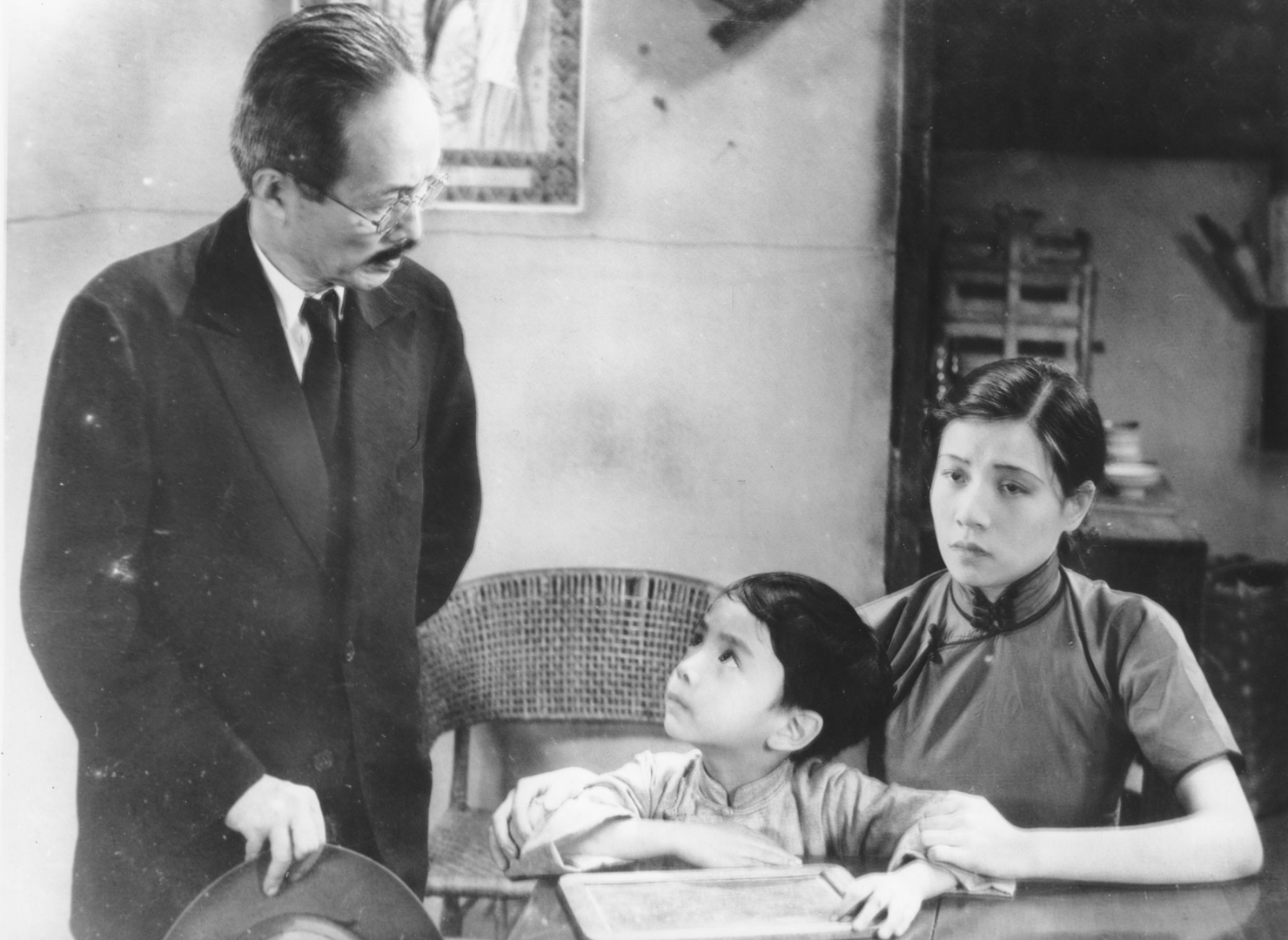
Wu Yonggang · 79m · DCP
Ruan Lingyu gives one of silent cinema’s most heartbreaking performances as a woman in 1930s Shanghai who becomes a sex worker to secure an education for her young son. Adapting tropes from Hollywood “fallen woman” films of the 1920s and 1930s for Marxist social critique — Wu Yonggang was part of a group of filmmakers who saw film as a medium of socialist education, disbanded by the Kuomintang in 1934 — The Goddess is one of the most important works of the Chinese Golden Age.
Courtesy of China Film Archive.
Wednesday, October 14 7:00 PM
Law of Desire (1987)

Pedro Almodóvar · 102m · 35mm
A filmmaker (Eusebio Poncela), his trans sister (Carmen Maura), and an obsessive young lover (a devilishly handsome young Antonio Banderas) become involved in a volatile triangle. Almodóvar, greatly inspired by the classic Hollywood melodramas of Douglas Sirk and Nicholas Ray, paints a bold, chaotic picture of queer life in post-Franco Spain; it is his attempt to explore “passion for its own sake...[a passion] so strong that it makes you do things which are truly monstrous or absolutely extraordinary.”
Saturday, October 17 9:30 PM
The Woman of the Port (1934)

Arkady Boytler · 76m · DCP
A woman fleeing scandal finds work as a cabaret dancer and prostitute in the shadowy port city of Veracruz, where an encounter with a sailor leads to tragedy. Director Arkady Boytler sought to create the great Mexican film after Sergei Eisenstein’s 1930 visit to the country, and the result is often credited with bringing about the Golden Age of Mexican cinema.
Collection of the Filmoteca UNAM.
Wednesday, October 21 7:00 PM
The Cloud-Capped Star (1960)
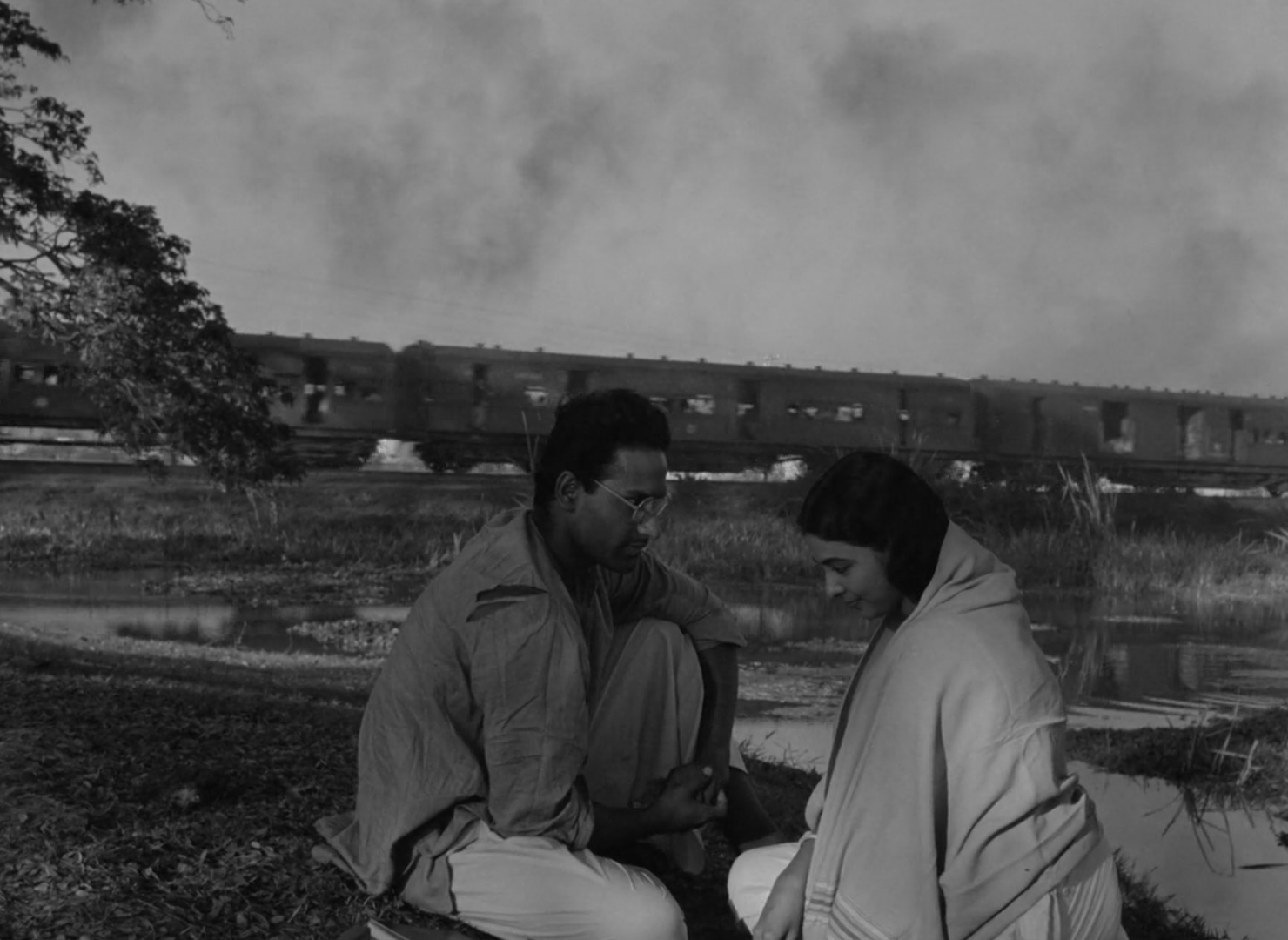
Ritwik Ghatak · 127m · DCP
In The Cloud-Capped Star, the second film of Ritwik Ghatak’s Partition Quartet, Ghatak departs from the New Wave realism of contemporaries Satyajit Ray and Mrinal Sen in favor of a lush, expressionist melodrama portraying the wake of the 1947 Partition of India. Ghatak interweaves elliptical editing, a densely layered soundtrack, experimental framing, and varied acting styles to tell the story of a family of East Bengali émigrés struggling to survive in a refugee camp on the outskirts of Calcutta and their self-sacrificial eldest daughter, Nita (Supriya Choudhury).
Wednesday, October 28 7:00 PM
The Widow (1955)

Park Nam-ok · 90m · DCP
After producing newsreels for the Ministry of National Defense during the Korean War, Park Nam-ok, Korea’s first female filmmaker, directed only one film: The Widow. Shin-ja (Lee Min-ja) lost her husband during the war and is living as a refugee. While pursuing financial independence, she becomes enmeshed in romantic turmoil amidst postwar reconstruction. The film naturalizes her longing for independence in a sympathetic portrait of a mother’s pursuit of sexual freedom through a quiet, measured drama of desire and disappointment.
Courtesy of Korean Film Archive.
Wednesday, November 4 7:00 PM
Min Yé (Tell Me Who You Are) (2009)

Souleymane Cissé · 135m · DCP
Originally conceived as a series, Souleymane Cissé’s Min Yé draws on the style of Malian television serials to tell a story of adultery within a polygamous marriage. Cissé, educated at Moscow’s VGIK in the 60s alongside fellow pioneers of African cinema Ousmane Sembène and Sarah Maldoror, reflects on the realities of Malian media production, where television is state subsidized and soap opera remains a vital vernacular. An indictment of the contradictions of the Mailian bourgeoisie, civic and social organizations become implicated in this high-pitched domestic drama.
Courtesy of Films Cissé.
Wednesday, November 11 7:00 PM
Cairo Station (1958)

Youssef Chahine · 77m · DCP
Despite its calamitous failure at the Egyptian box office, Cairo Station epitomizes beloved auteur Youssef Chahine’s hybridization of Western genres (here, Italian neorealism and sociological noir) against the backdrop of domestic political turmoil. The collapse of monarchy and building of a republic, the emergence of Egypt as a leader of African decolonization, Nasser’s 1956 triumph in the Suez Crisis, and accelerated industrialization and cultural revival ushered in a new era of nationalist optimism. Chahine, however, tells the tragic story of those left behind by revolution.
Wednesday, November 18 7:00 PM
Mélo (1986)
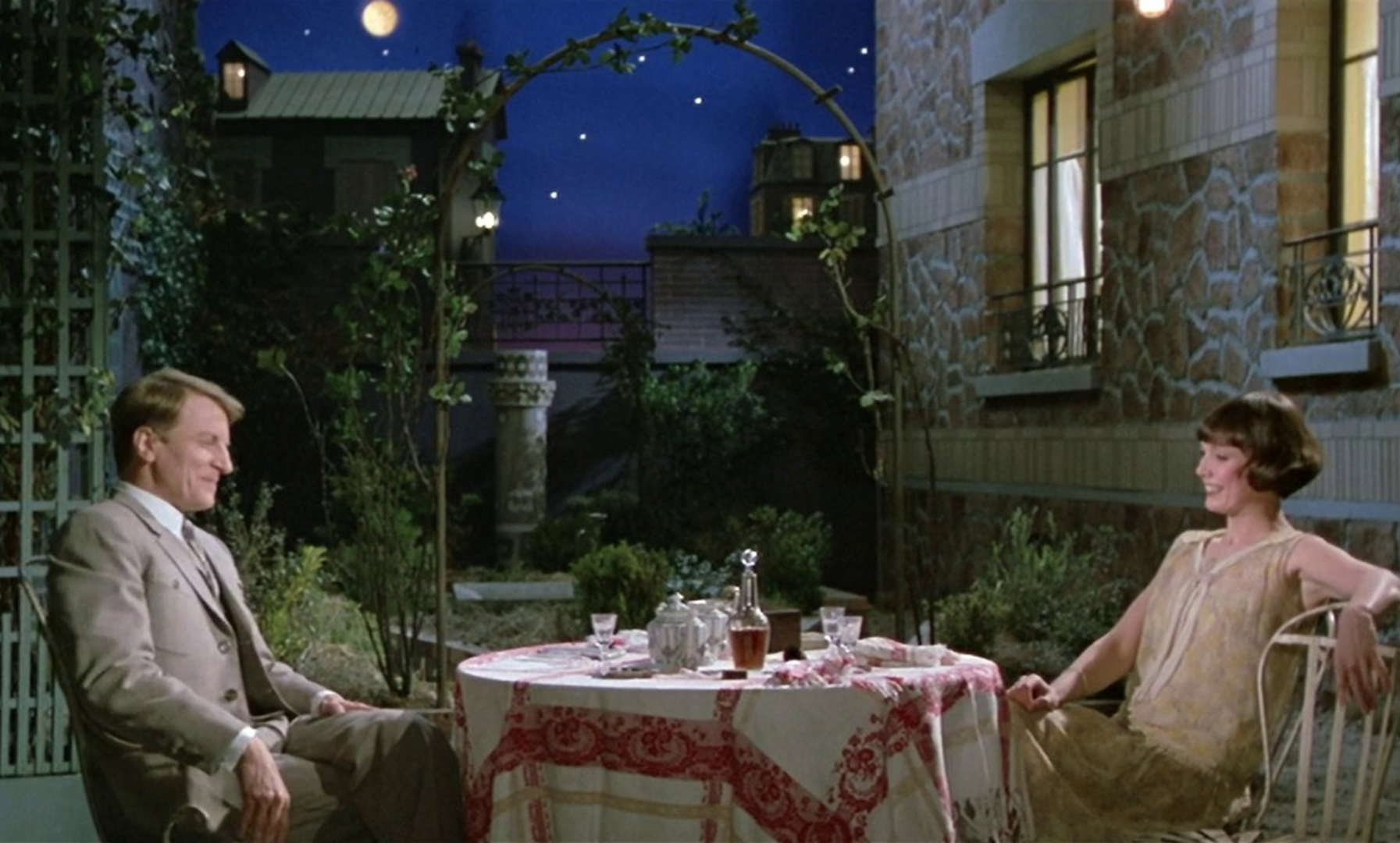
Alain Resnais · 112m · DCP
Melodramatic dramaturgy and conspicuously theatrical mise-en-scène situate Mélo somewhere between the stage and the screen. Resnais’ close adaptation of boulevard playwright Henry Bernstein’s eponymous 1929 play is as much an homage to the bygone film style of the 1930s as it is the theater. Symmetrical compositions, durational long takes, and an improbable plot call attention to artifice while retaining the devastating emotional truths of lust and despair in 1920s Paris.
Wednesday, December 2 7:00 PM
All That Heaven Allows (1955)

Douglas Sirk · 89m · 35mm
Sirk’s lavish style reaches its apex in the ill-fated affair between a wealthy widow (Jane Wyman) and her young gardener (Rock Hudson), in this crown jewel of the American melodrama. Sirk was a leading stage director in Weimar Germany — notably Brecht’s The Threepenny Opera — before fleeing the Nazis and eventually joining a contingent of German émigrés in Hollywood. Though poorly received by critics upon release, Sirk’s oeuvre was revitalized by Cahiers du Cinéma critics and is beloved by filmmakers and academics alike for its use of style to address midcentury American social issues.