


Robert Beavers: My Hand Outstretched to the Winged Distance and Sightless Measure
Organized by: Hannah Yang and Jackson Zaro
Robert Beavers (b. 1949) shot his first roll of film in New York during the height of the New American Cinema in 1966, but his work stands distinctly apart from it and everything else. Perhaps this can be attributed to his leaving the country only a year later with filmmaker Gregory J. Markopoulos. Or perhaps it is due to his hand-made approach: in filming, where Beavers’s hand dictates the camera’s swing or the appearance of a matte, or in editing, where he holds the film strip to determine a cut. This tactile approach, echoing the filmmaker’s interest in text, architecture, painting, and craftwork, also defines his filmic material. Instead of absorptive images that demand spectatorial submission, Beavers’s images and sounds activate the mind, creating a space to think in. They are imprints and traces rather than definitive wholes, like a pattern in a decorative structure or the curve of a letter on a page (both subjects in his films). Yet Beavers rarely deals in fragmented abstraction. His films, which contain objects and narratives from life, are reflexive, turning towards the filmmaker and his tools: Beavers behind his tripod and Bolex, reflected back in a mirror. The cycle My Hand Outstretched to the Winged Distance and Sightless Measure, presented in six programs, is an extended portrait of Beavers and Markopoulos, measuring in moments, spaces, and light an extraordinary life in film. The final programs exhibit some of his early influences, his current community of filmmaker friends, and Markopoulos’s early Midwestern films, preserved by the Temenos Archive.
Special thanks to Robert Beavers for the possibility of showing the films, Mark Johnson (Harvard Film Archive), the Temenos Archive, Canyon Cinema, and the filmmakers in Program 8 for lending their prints.
Early Monthly Segments / Winged Dialogue / Plan of Brussels / The Count of Days (1968-70/2002 / 1967/2000 / 1968 / 1969/2001)
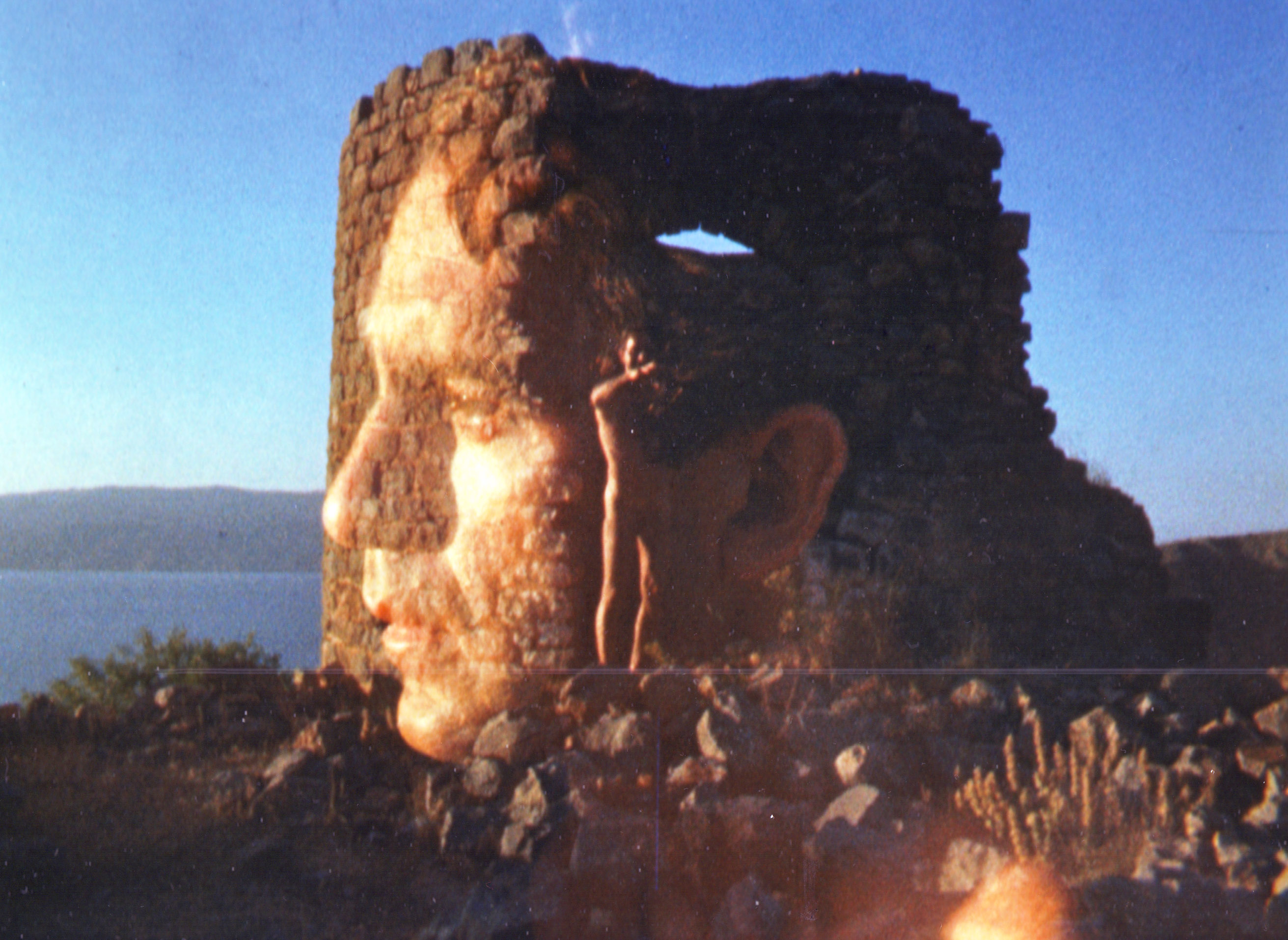
Robert Beavers · 33m / 3m / 18m / 21m · 16mm
Early Monthly Segments, shot when Beavers was eighteen and nineteen, depicts his early life with filmmaker Gregory J. Markopoulos in Europe. The film is saturated with mythic eros – bodies, portraits superimposed over ruins, and Markopoulos as center and originator of light and image – mixed with an energetic exploration of film material, the film strip, and the camera itself. Followed by Winged Dialogue, Plan of Brussels, and The Count of Days.
Sunday, March 29 7:00 PM
Palinode / Diminished Frame / Still Light (1970/2001)
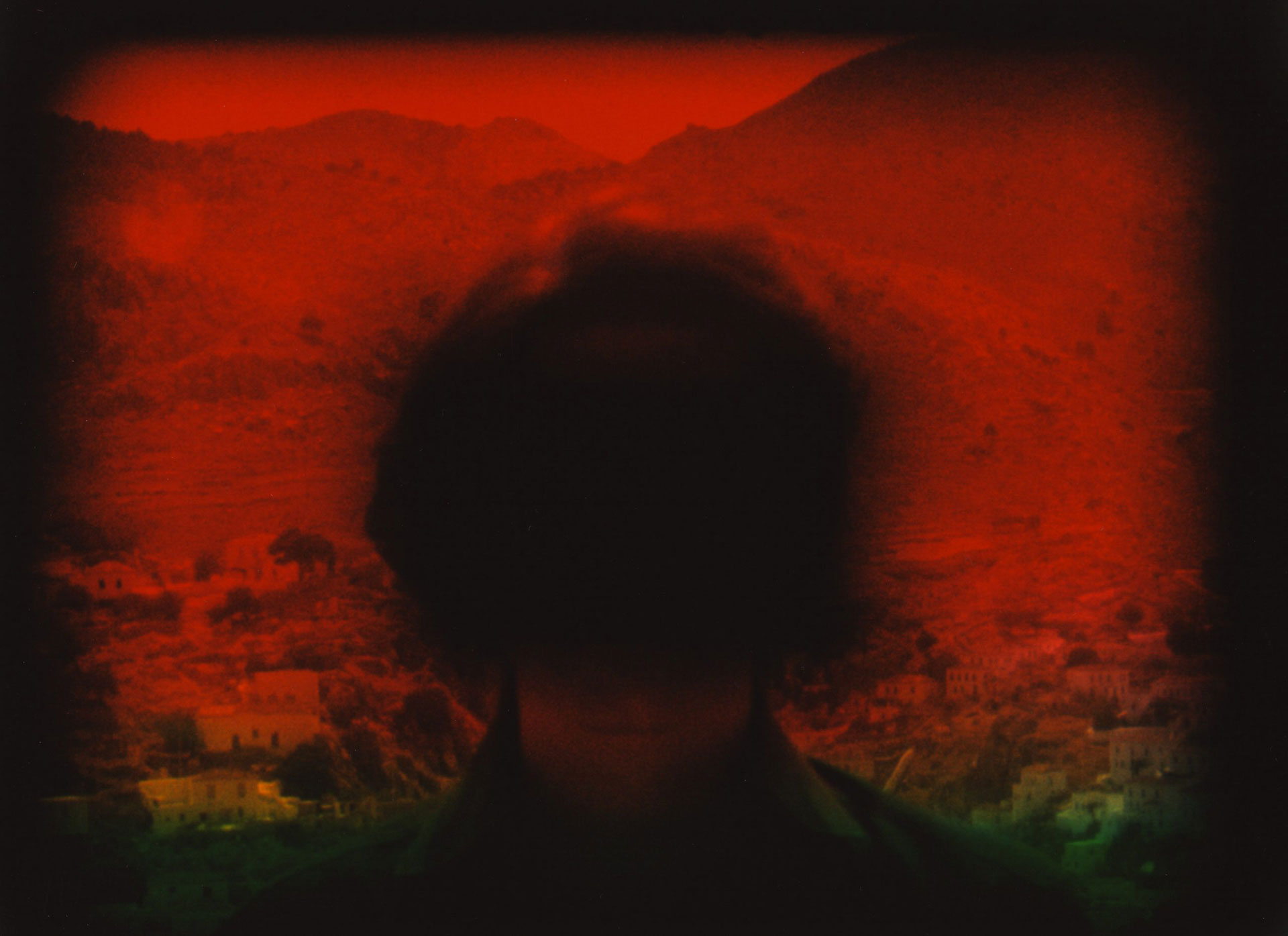
Robert Beavers · 21m / 24m / 25m · 16mm
In the first part of Still Light, Beavers’s use of color filters is centered (in a grid that comes in and out of focus in the middle of the frame) throughout a portrait of a young man. One gets the sense that this prismatic range is a part of the Greek atmosphere, a passionate color field of feeling. Experimentation with inserts and mattes continue in Palinode and Diminished Frames, shot in Switzerland and Berlin, treating cities, history, and time.
Sunday, April 5 7:00 PM
From the Notebook of... / The Painting / Dedication: Bernice Hodges (1971/1998 / 1972/1999 / 2024)
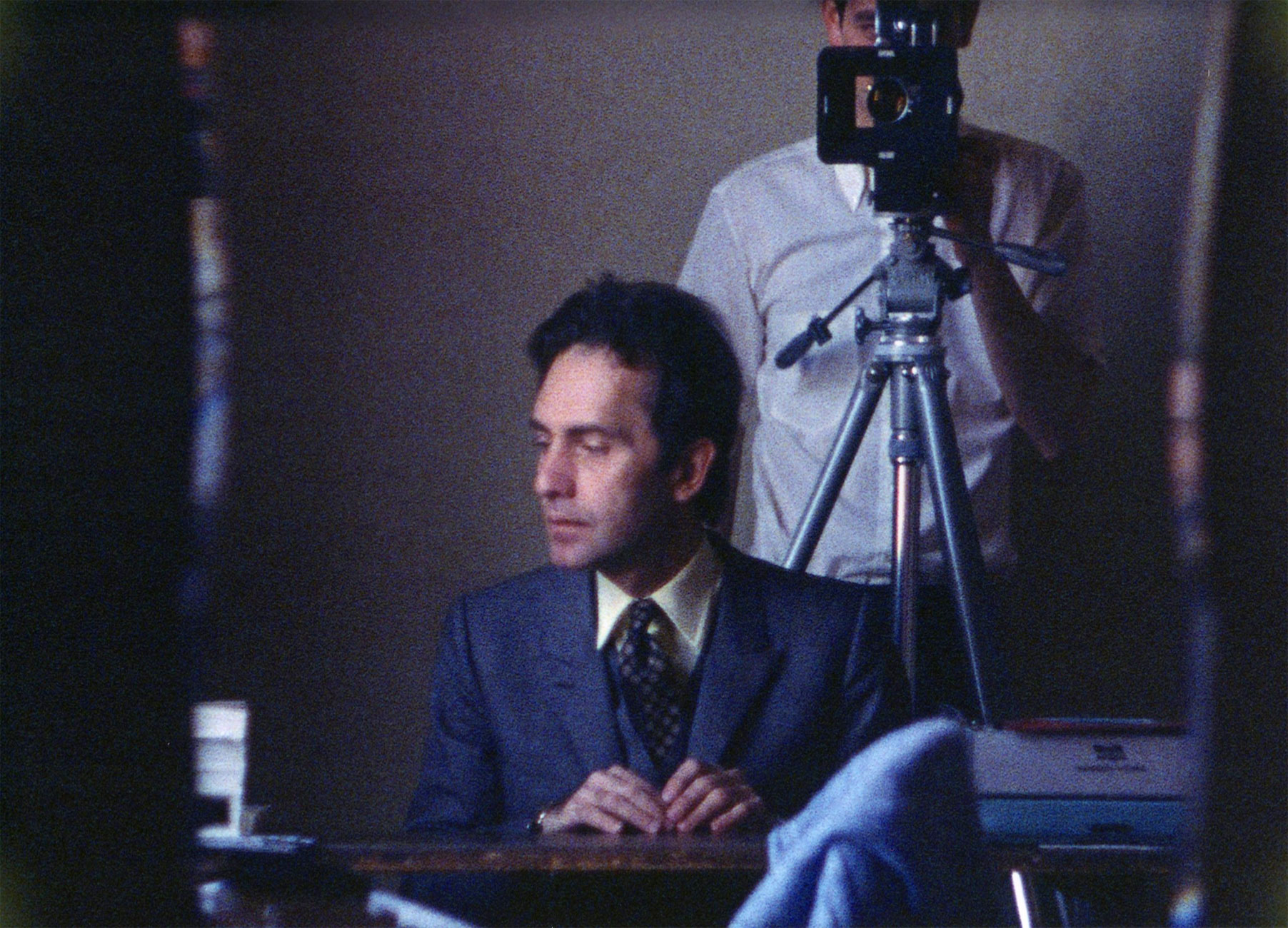
Robert Beavers · 48m / 13m / 16m · 35mm / 35mm / 16mm
From the Notebook of… is one of cinema’s great achievements. An inventive work that blends film and notebook into a hybrid creature, it brings movements, cuts, shadows, light, text, and sound together in a sumptuous, textural display of an active mind and a steadily scribbling hand. The Painting moves between a 15th century triptych and the modern world. Dedication: Bernice Hodges is a work for the filmmaker’s childhood neighbor and his first inspiration.
Screening will be preceded by an introduction and followed by a Q&A with director Robert Beavers.
Sunday, April 12 7:00 PM
Work done / Ruskin / Amor (1972/1999 / 1975/1997 / 1980)
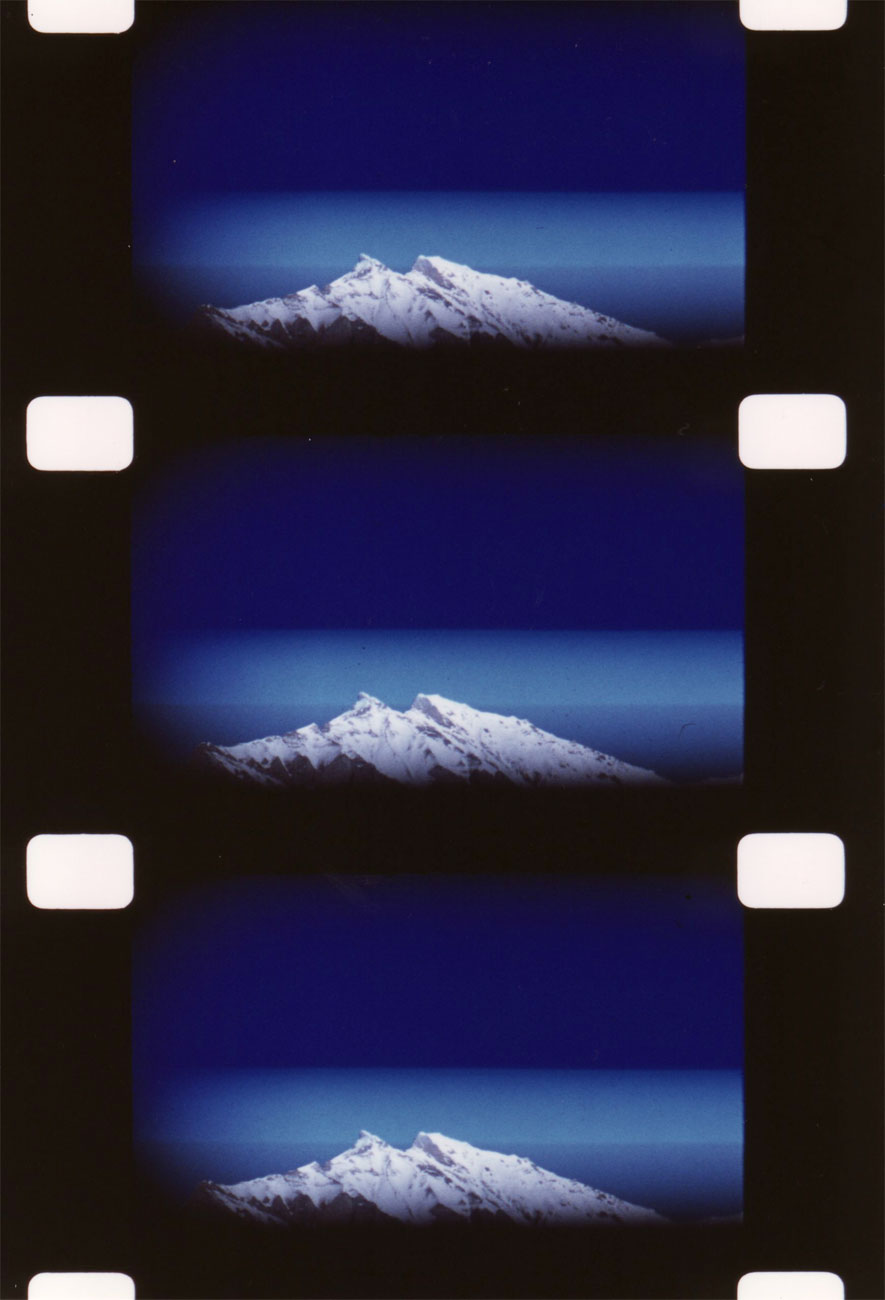
Robert Beavers · 22m / 45m / 15m · 35mm
Work done opens on a gleaming slab of ice that evidences and cracks open the concealed relationship between object and perception, continuing through the transformation of elements. Ruskin visits the sites of Jon Ruskin’s The Stones of Venice. Amor is a tactile work of double-sided viewing, where past and present converge at the meeting of two palms in a clap, the flap of a bird’s wings, the swinging of a shadow from one side to the other.
Sunday, April 19 7:00 PM
Efpsychi / Sotiros / Wingseed (1983/1996 / 1976-78/1996 / 1985)
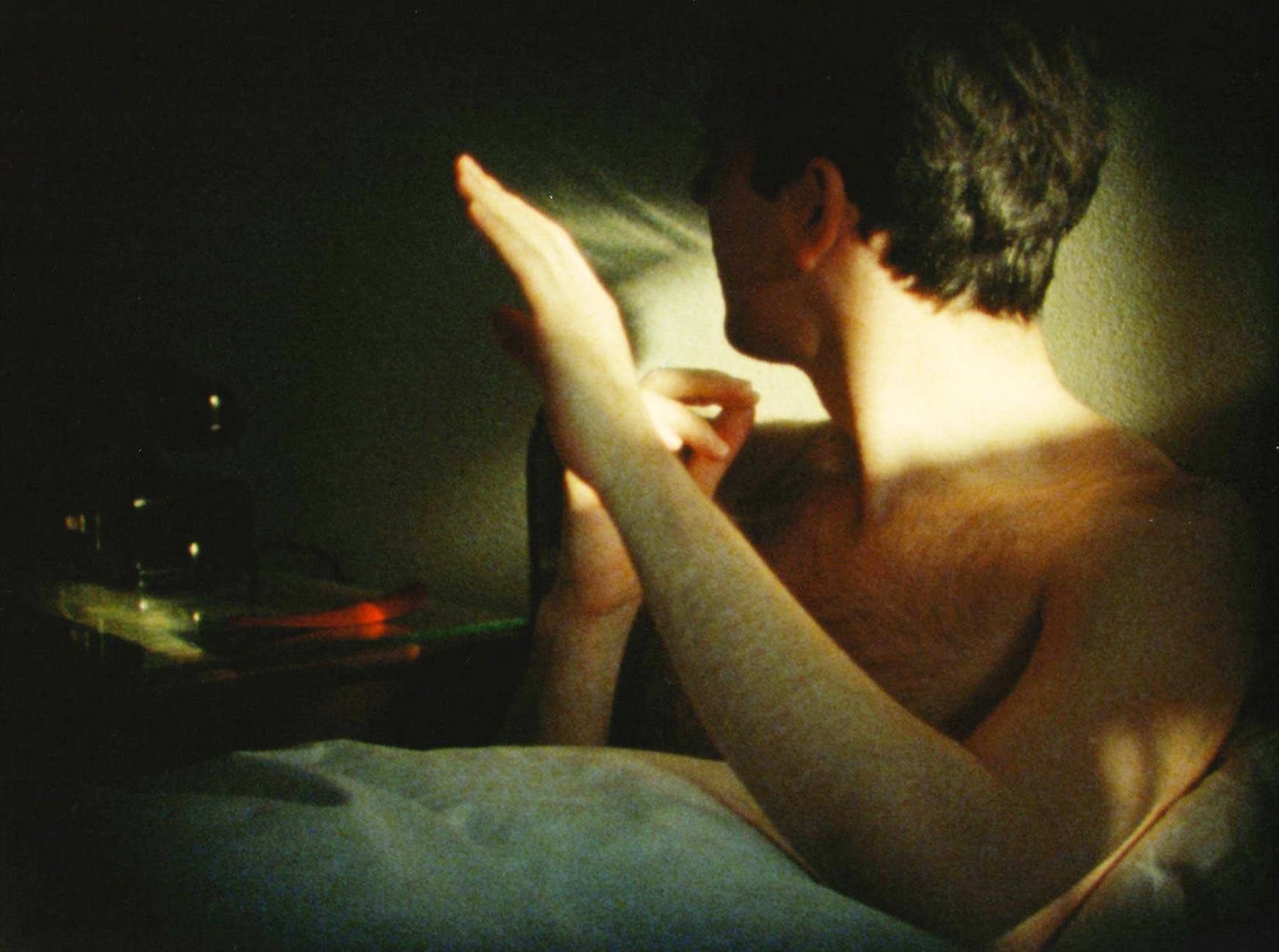
Robert Beavers · 20m / 25m / 15m · 35mm
Sotiros, a word alluding to Apollo and his healing powers, was shot during Beavers’s recovery from an accident which left him injured for many months. The film’s rare intertitles, “He said,” and “he said.”, hold unspoken images in between them. Patterns are created out of the movements between the frame’s left and right sides while golden light travels across walls. Wingseed and Efpyschi are films of eroticism and Greek landscape.
Sunday, April 26 7:00 PM
The Hedge Theater / The Stoas / The Ground (1986-90/2002 / 1991-97 / 1993-2001)
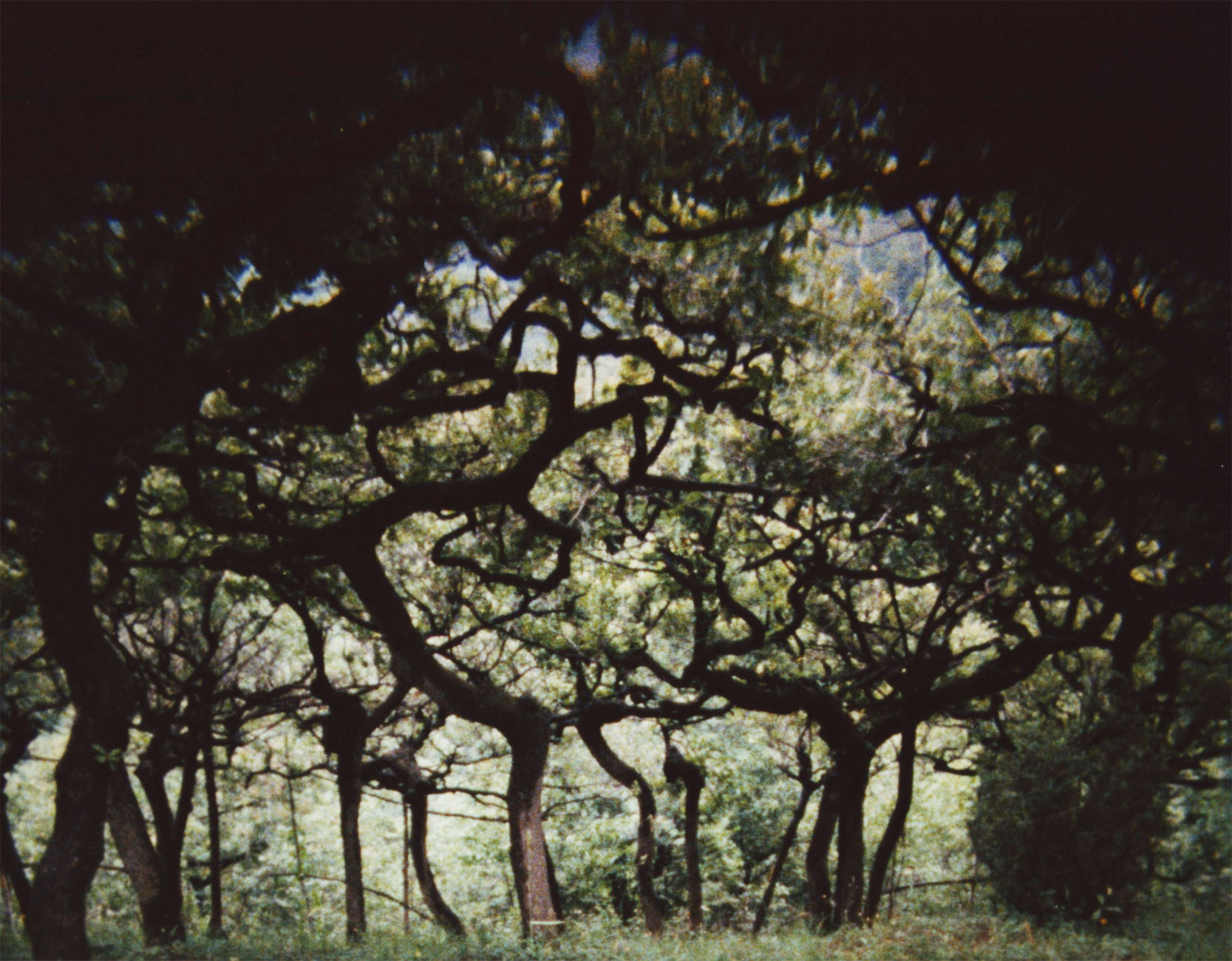
Robert Beavers · 19m / 22m / 20m · 35mm
The Hedge Theater charts a fascinating relation between the filmmaking apparatus and architecture. Borromini’s straight lines bend while his arches flatten under the lens’s curvature. The repeated turning of the lens turret produces an image caught in between opening and shadow, resembling the natural mode of looking: the blinking eye or the downcast, lidded gaze. The Stoas and The Ground mark the end of the cycle and the absence of a figure.
Sunday, May 3 7:00 PM
Early Abstractions / Valentin de las Sierras / Sirius Remembered / Ming Green (1939-1956 / 1971 / 1959 / 1966)
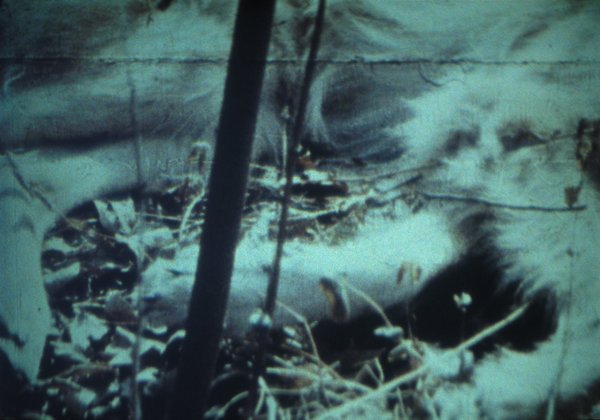
Harry Smith / Bruce Baillie / Stan Brakhage / Gregory J. Markopoulos · 23m / 10m / 11m / 7m · 16mm
Beavers’s interest in film was sparked in high school. Although he failed to get his plans for a film club approved, his trips to New York City still proved fruitful as he encountered the thriving New American Cinema at places like the Filmmaker’s Co-op. Even after his quick departure from the States, Beavers states that the films’ “courage and freedom,” and their wholly new display of the yet-uncommercialized body, greatly influenced him.
Sunday, May 10 7:00 PM
Wenn du eine Rose siehst / A Return / Kopfueber / N’Importe Quoi / Tirana / Earth in the Mouth / Room Window Sea Sky / Together (1995 / 2018 / 2009 / 2023 / 2020 / 2020 / 2014 / 2018)
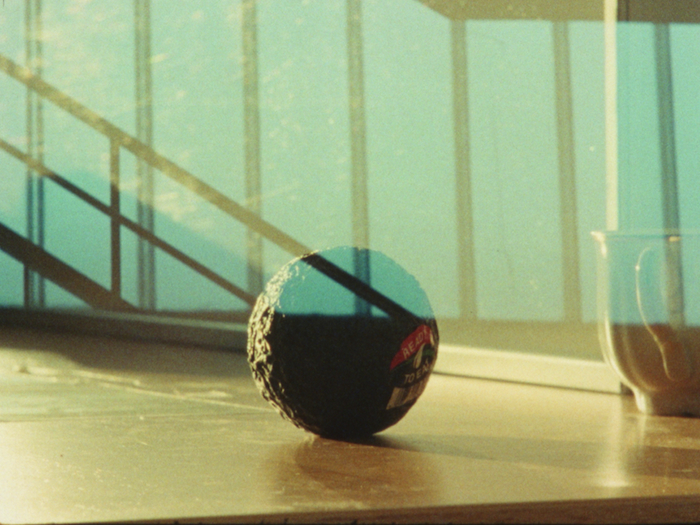
Renate Sami / James Edmonds / Ute Aurand / Luke Fowler / Eva Claus / Ewelina Rosinska / Peter Todd / Peter Todd · 4m / 6m / 15m / 9m / 2m / 20m / 3m / 3m · 16mm
The program includes Berlin filmmakers, Ute Aurand and Renate Sami, who have inspired and sustained much of my own recent filmmaking experience. Ute also introduced me to Peter Todd and Ewelina Rosinska: one a master of contemplation and the other of intuitive editing. The English painter & filmmaker, James Edmonds has been a most committed filmmaker friend in helping to restore Markopoulos’s Eniaios, and creating the contrasting world of his own films, where the hand gesture is so rich. With Luke Fowler, I am impressed by an elegant energy and dexterity and with Eva Claus by her search for simplicity. - RB
Sunday, May 17 7:00 PM
Lysis / Charmides / Christmas USA / Swain / Flowers of Asphalt / Eldora (1948 / 1948 / 1949 / 1950 / 1951 / 1953)
Gregory J. Markopoulos · 25m / 11m / 13m / 20m / 7m / 11m · 16mm
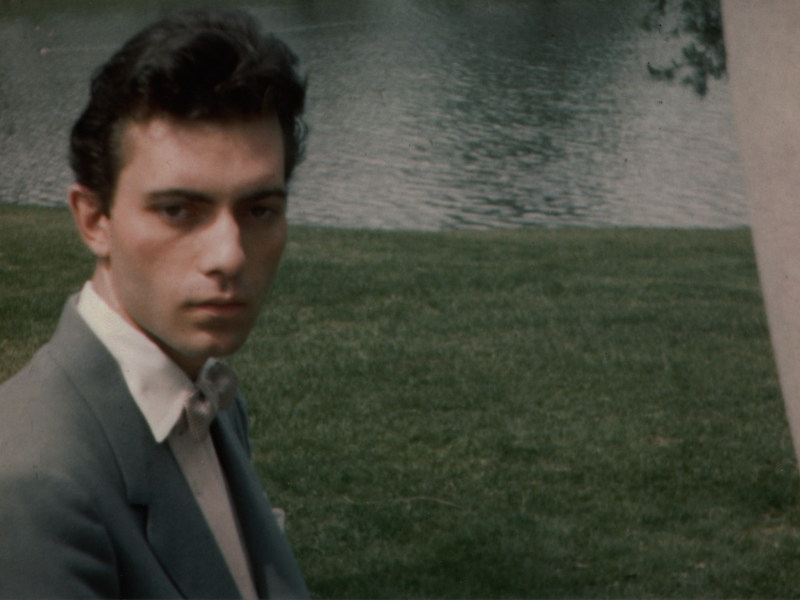
The program of Gregory Markopoulos’s very early films starts with Lysis and Charmides, made when the filmmaker was nineteen years old in his hometown of Toledo, Ohio. Both are highly personal allegories of ‘a wanderer’ in erotic rapture and melancholic isolation. Swain develops related themes, condensing its symbols and themes in a narrative of fleeing from restraints and norms. It is a cascade of fragments in memory. Christmas USA and its mirror, Flowers of Asphalt, presents the filmmaker’s home, family, and neighborhood, contrasted to his individual lyric rituals. And the last of these early expressions of adolescent sexuality is Eldora. – RB