


Cinema’s Garden: The Films of Rose Lowder
Programmed by: Olivia Hunter-Willke
The practice of French-Peruvian avant-garde filmmaker Rose Lowder (born 1941) concentrates on radical ways to refine photographic and temporal features of the image. Equipped with a 16mm Bolex and filming mostly natural elements, she composes and edits images in-camera, splicing frames together as the film strip continually advances over the lens. Filmed frame-by-frame, but not sequentially, Lowder emulsifies some of the skipped frames and leaves others blank, then uses the camera to rewind and film the frames she had previously not used. Using this method, “she has created a new viewing experience, in which two different situations are viewed simultaneously” (Kortfilm). Lowder pushes the boundaries of what it means to capture nature on film, shaping a cinematographic experience with her meticulous meditations. Her films present as treasures of the natural world, but not overly precious depictions: tactile exercises of what film encompasses at its most simple yet exacting modes of operation.
All 16mm prints courtesy of Light Cone.
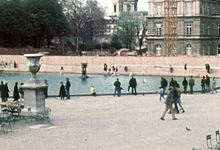
Scènes de la vie française: Avignon / Scènes de la vie française: Paris / Scènes de la vie française: Arles / Scènes de la vie française: La Ciotat (1986 / 1986 / 1985 / 1986)
Rose Lowder · 11m / 26m / 21m / 31m · 16mm
In all of the short films in the Scènes de la vie française series, the same weaving process is utilized. Carried out without an optical printer, small units of images taken in the same locations, from the same point of view, are recorded at different times. The process allows the viewer to see the same environment simultaneously at different periods.
Sunday, January 11 7:00 PM
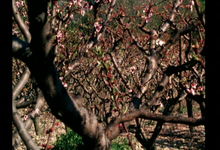
Rue des Teinturiers / Champ provençal / Les tournesols / Les tournesols colorés / Impromptu / Quiproquo / Loops (1979 / 1979 / 1982 / 1983 / 1989 / 1992 / 1976-1997)
Rose Lowder · 31m / 9m / 3m / 3m / 8m / 13m / 6m · 16mm
Assembled frame-by-frame (except Quiproquo and Loops), these films are concerned with spatiotemporal patterns and spontaneity. Rue des Teinturiers is composed of twelve reels, each filmed on different days during a 6 month period from a position on a balcony. Champ provençal consists of a peach orchard at three different periods from a single viewpoint. The Tournesols films are structured according to a series of patterns on plants situated in different areas of contiguous sunflower fields.
Sunday, January 18 7:00 PM
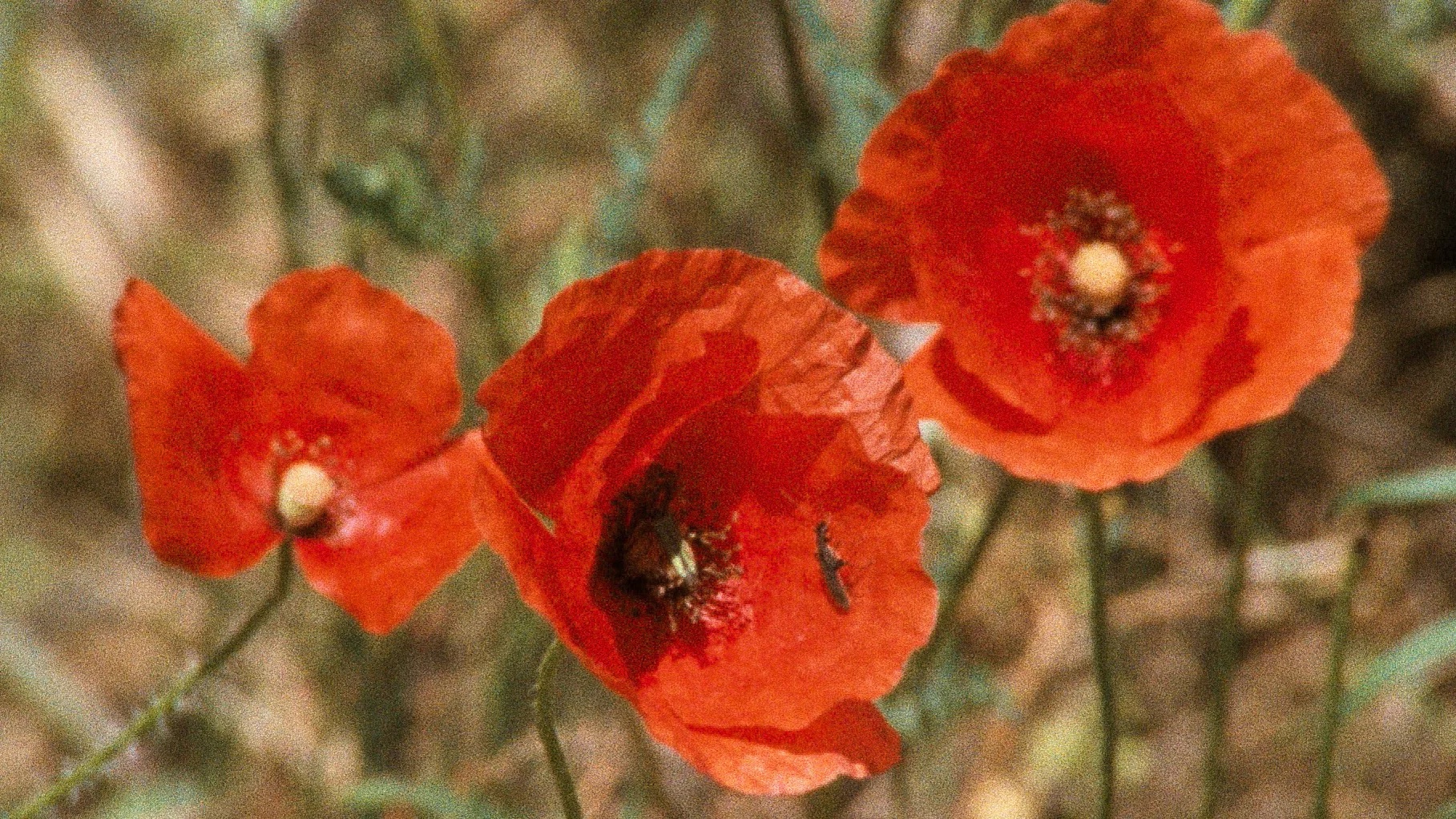
Poppies / Poppies and Sailboats / Habitat, Batrachian / Bouquets 1-10 / Bouquet 11-20 / Bouquets 21-30 / Bouquets 31-40 (2000 / 2001 / 2006 / 1995 / 2011 / 2001 / 2022)
Rose Lowder · 3m / 3m / 9m / 12m / 14m / 14m / 11m · 16mm
The Bouquets series consists of one-minute films composed in-camera. The filming entails using the film strip as a canvas with the freedom to film frames on any part of the strip in any order, running the film through the camera as many times as needed. Each bouquet of flowers is also a unique bouquet of film frames.
Sunday, January 25 7:00 PM
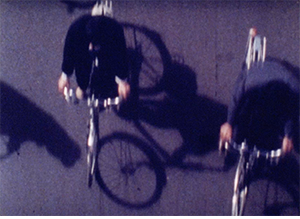
Two Pictures / L’Invitation au Voyage / Beijing 1988 (1999 / 2003 / 2011)
Carl Brown, Rose Lowder / Carl Brown, Rose Lowder / Rose Lowder · 12m / 33m / 12m · 16mm
Two Pictures and L’Invitation au Voyage were made in collaboration with artist Carl Brown, who endlessly explored the possibilities of the chemistry of film. Beijing 1988 was filmed in China, May 1988, a year before the Spring 1989 Tiananmen rebellion, “where the ancient traditional philosophies and social practices confront the political and economical ideological ambitions of the State" (Light Cone).
Sunday, February 1 7:00 PM
Côté Jardin / Rien d’extraordinaire / Jardin du soleil / Fleur de Sel / Jardin du Marais / Jardin du Sel / Sous le Soleil / Sources (2007 / 2011 / 2010 / 2010 / 2010 / 2011 / 2011 / 2012)
Rose Lowder · 5m / 2m / 2m / 32m / 2m / 16m / 4m / 6m · 16mm
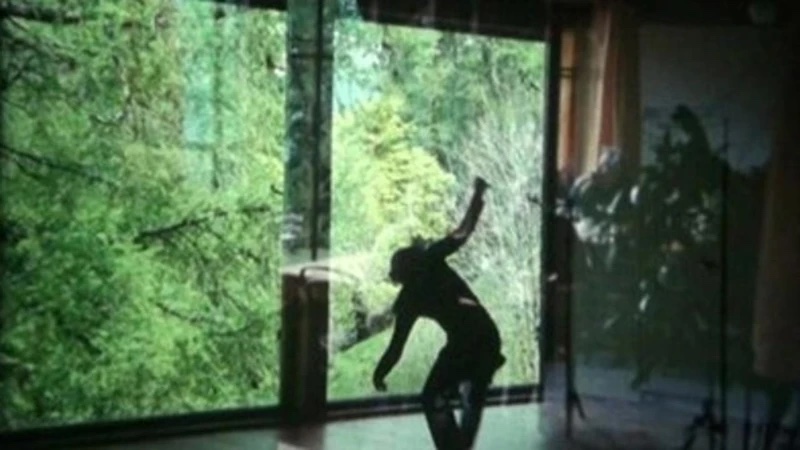
This block of films is concerned primarily with gardens and structured natural environments: Côté Jardin is a view of three organic gardens; Rien d’extraordinaire is a glimpse around the Hôtel-Pension Beau-Site on the Chemin sur Martigny, Switzerland, situated in a hamlet surrounded by snow-capped mountains; and Jardin du soleil revolves around solar panels in two different places, Cascina Piola, in Italy, and Le Vieil Eclis, in Loire-Atlantique, France.
Sunday, February 8 7:00 PM
Foryannfromrose / Turbulence / Tartarughe d’Acqua / La Source de la Loire (2015 / 2015 / 2017 / 2021)
Rose Lowder · 3m / 7m / 24m / 20m · 16mm
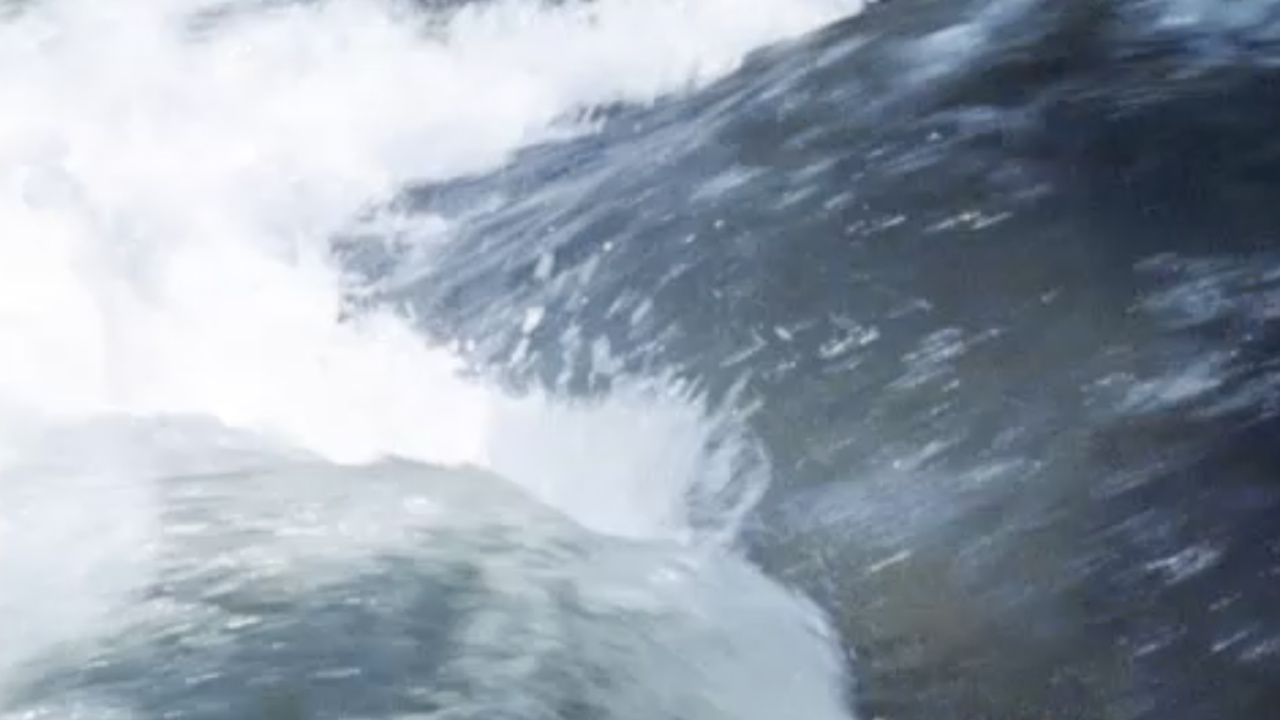
Foryannfromrose is an hommage to filmmaker Yann Beauvais. Turbulence was captured in the medieval town of Alet les Bains. Tartarughe d’Acqua was filmed in the town of Asti, Piemonte, in Italy, which has in its park a small pond home to a great number of turtles. La Source de la Loire starts in the Department of Ardèche with the Mont Gerbier de Jonc, the "true" source, the most distant from the mouth of the Loire, the longest wild river in France.